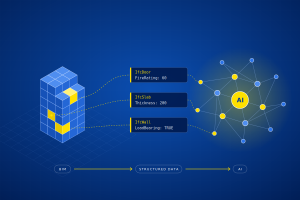
PPVC stands for Prefabricated Prefinished Volumetric Construction. It is a method in which complete building modules, often with finishes, fittings and services already installed, are manufactured in an off-site facility and then transported to site for assembly.
For Singapore’s construction industry, PPVC is one of the key approaches to building more productively with less on-site manpower. But PPVC also changes how a project has to be designed and co-ordinated, and that is where BIM becomes essential.
What is PPVC?
In conventional construction, most of the work happens on site, step by step. In PPVC, a large part of that work moves into a factory.
Each volumetric module is built as a three-dimensional unit, such as a room or part of an apartment. Walls, floors, finishes and many mechanical, electrical and plumbing (MEP) elements can be completed in a controlled environment before the module leaves the factory. On site, the modules are lifted into place, stacked and connected.
Why is PPVC beneficial to the sector?
PPVC offers several advantages over conventional, fully on-site construction:
- Higher productivity: much of the labour-intensive work moves off site, reducing dependence on large site workforces.
- Faster construction: modules can be fabricated while site works such as foundations are still in progress.
- Better quality control: factory conditions allow more consistent workmanship and inspection than open site conditions.
- Less site disruption: fewer on-site activities mean less noise, dust and congestion around the site.
- Improved safety: more work is carried out at ground level in a controlled environment rather than at height.
- Standardisation: repeating module types allows materials and details to be standardised, which helps control cost and waste.
Lean construction principles also apply. Because modules are large and take up significant storage space, they are ideally fabricated and delivered just in time for installation, rather than stored on site for long periods.
Why does PPVC depend on good information?
PPVC brings design and construction decisions forward. Once modules go into fabrication, late design changes become difficult and costly. A clash or dimensional error is not discovered and fixed once on site; it may be repeated across every module of the same type.
In PPVC, errors are expensive because they are repeated in every module and often discovered late.
That makes accurate, co-ordinated information before fabrication far more important than in conventional construction.
How does BIM complement PPVC construction?
BIM provides the shared, co-ordinated digital model that PPVC needs at every stage.
Design phase
BIM supports a modular design approach from the start, helping teams define standard module types, dimensions and connection details.
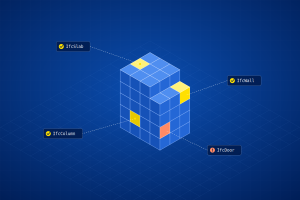
Clash detection in the federated BIM model allows architectural, structural and MEP designs to be checked against each other before fabrication. Issues that would otherwise surface on site can be resolved while they are still easy to change.
The model also becomes a single reference for design intent. For example, the design team can communicate hundreds of material and finish selections to the respective sub-contractors, so the intent is carried through into fabrication.
Fabrication phase
From the co-ordinated 3D BIM model, 2D shop drawings and fabrication information can be generated for each PPVC module. Quantities and module schedules can also be extracted from the same model, keeping drawings, quantities and design consistent with each other.
Logistics and assembly phase
BIM supports planning of the installation sequence, including transport, lifting and just-in-time delivery of modules. 4D BIM, which links the model to the construction programme, helps teams visualise and check the assembly sequence before work starts on site.
During assembly, the model is used as the reference to verify that modules are installed in the correct position and sequence.
Handover and operation
Because many services are installed inside modules in the factory, an accurate as-built model is especially valuable at handover. It gives building owners a reliable record of what is concealed within each module for future maintenance.
PPVC, DfMA and Singapore’s construction industry
PPVC is part of a wider shift towards Design for Manufacturing and Assembly (DfMA), which Singapore’s Building and Construction Authority (BCA) has promoted as a way to raise productivity in the built environment. PPVC has also been required for selected Government Land Sales sites.
As the industry relies less on large on-site workforces and more on manufacturing processes, the skills needed are changing. Architects, civil and structural engineers and M&E engineers increasingly need to understand how their design decisions affect each other, and how those decisions translate into fabrication and assembly.
This creates strong career opportunities for professionals who combine construction knowledge with BIM and digital co-ordination skills.
At AcePLP, we support project teams with BIM services across design co-ordination, clash detection and model-based delivery, helping prefabricated and conventional projects move from design to site with fewer surprises.
Frequently Asked Questions
What does PPVC stand for?
PPVC stands for Prefabricated Prefinished Volumetric Construction. It is a construction method in which complete volumetric modules, often with finishes, fittings and services installed, are manufactured off site and then transported to site for assembly.
What are the benefits of PPVC construction?
PPVC can improve productivity, shorten construction time, provide better quality control through factory conditions, reduce noise and dust on site, improve safety and allow greater standardisation of materials and details.
How is BIM used in PPVC projects?
BIM is used to design standard module types, detect clashes between architectural, structural and MEP elements before fabrication, generate shop drawings and quantities, plan transport and assembly sequences through 4D BIM, and provide an accurate as-built record at handover.
Why is clash detection so important for PPVC?
Once modules are fabricated, design changes are difficult and costly. A clash in one module type may be repeated across every module of that type. Detecting and resolving clashes in the BIM model before fabrication avoids repeated errors and costly rework on site.
What is the difference between PPVC and DfMA?
DfMA (Design for Manufacturing and Assembly) is the broader approach of designing buildings so that components can be manufactured off site and assembled efficiently on site. PPVC is one specific DfMA method that uses complete volumetric modules.
What careers are growing because of PPVC and DfMA?
Demand is growing for architects, engineers, BIM co-ordinators and BIM modellers who understand prefabrication, multidisciplinary co-ordination and how design decisions translate into fabrication and assembly.